The relevance of the Product Carbon Footprint to assess the environmental impact of biocides

Monika Lamoratta, Pietro Rosato – LANXESS

Sustainability in the chemical industry

Sustainability is a strategic goal for all industrial sectors. For the chemical industry, it represents an even greater challenge, as most companies take this responsibility very seriously and strive to anticipate future regulations. For paint and coating manufacturers, sustainability is becoming increasingly important, as the regulatory framework is pushing the sector toward less hazardous and more environmentally friendly solutions. The main activities focus on five key themes which, accompanied by concrete objectives, all follow the same basic principle: all actions must increase the company’s value and improve the quality of life for present and future generations.

Sustainable products
The ‘Product Sustainability Monitor’ was specially developed to systematically evaluate the sustainability level of products from a business, environmental, and social perspective.  The final goal is to safeguard the long-term success by developing innovative processes and products which in the end is also helping customers to make their businesses more sustainable 2. 

How is Lanxess Material protection products addressing these principles in the production and application of biocides?
Climate neutrality has an impact on the production and use of biocides. To measure the impact a product has on climate, the Product Carbon Footprint (PCF) is calculated. Lanxess is using an automated tool to calculate PCFs following the ISO 14067 method and the TfS (Together for Sustainability) guidelines for the PCF calculation. In the calculation scope 1, 2 and 3 emissions are included. Scope 1 emissions are direct emissions that are generated during the production process. Scope 2 emissions are defined as indirect emissions from purchased energy like e.g. power and steam. Most important for biocides are scope 3 emissions. They are defined as Indirect emissions from raw materials, generated outside of Lanxess control e.g.: Emissions related to production of raw materials. For biocides by far the biggest contributor are scope 3 emissions from raw materials.

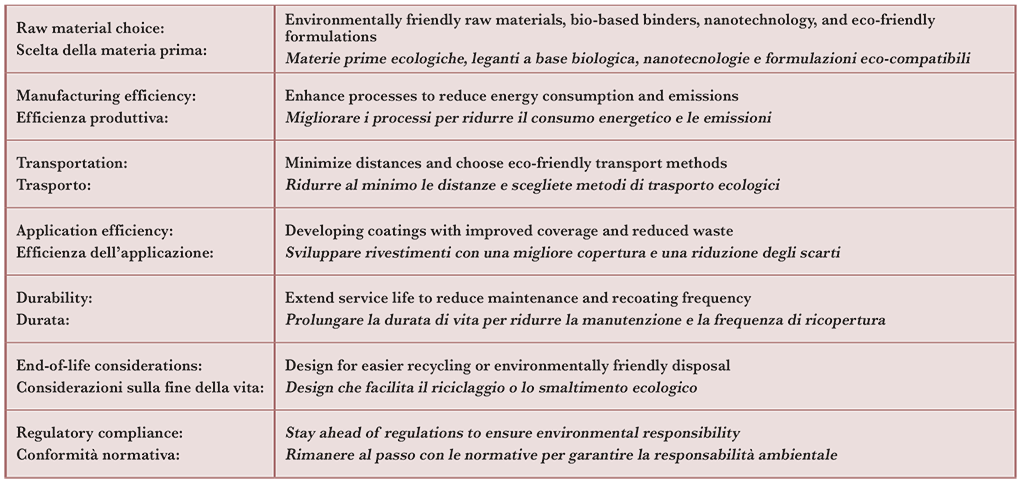
Tab. 1 – Key parameters to improve the sustainability of an end-product


Biocides in the industry
With a focus on biocides like CMIT/MIT or alternative preservation like phenoxyethanol used in the paint and coatings industry we will outline their profound implications for sustainability. The modern world relies heavily on paints and coatings for both aesthetic and functional purposes. These products enhance the durability, aesthetics, and protection of surfaces, ranging from architectural structures to industrial machinery. However, the journey of paints and coatings, from the production line to their final application, is fraught with challenges, and one of the most formidable foes in this journey is microbial contamination.
Microorganisms, including bacteria and fungi can thrive in the water-based environment of a paint. Their growth will not only compromise the product’s quality but also raise health and environmental concerns. This is where biocides come into play.
Biocides are chemical substances designed to inhibit, prevent, or end the growth of microorganisms, ensuring the longevity and performance of these essential industrial products. Biocides are instrumental in preventing contamination throughout the manufacturing process. This not only ensures the integrity of the product but also mitigates the potential risks posed by microbial growth during production.
Moreover, biocides are essential for preserving the quality of paints and coatings ‘in the can’. In the moment the paint is manufactured and stored in containers, it becomes susceptible to contamination from airborne microorganisms and those that may have been introduced during production by raw material or improper hygienic conditions. Without effective protection, these microorganisms can multiply, leading to issues such as color change, foul odors, reduced adhesion, and even the degradation of the paint’s essential properties. Biocides are contributing in a positive way to the cradle-to-grave analysis of the paint itself.
When incorporated into paint formulations, biocides function as guardians, preventing microbial growth and keeping the product’s integrity. This ensures that the paint is still in pristine condition from the moment it is produced to its application.

Latest restrictions on biocides
In recent years, there has been a growing focus on the environmental and health impacts of chemicals used in industrial applications. Regulatory bodies in Europe and around the world have been introducing restrictions and regulations to minimize the usage of certain chemical substances, including biocides. This shift in regulatory landscape has raised concerns in the paint and coatings industry, as the availability and use of traditional biocides are increasingly constrained. Only a few examples mentioned are formaldehyde, MIT, zinc pyrithione.

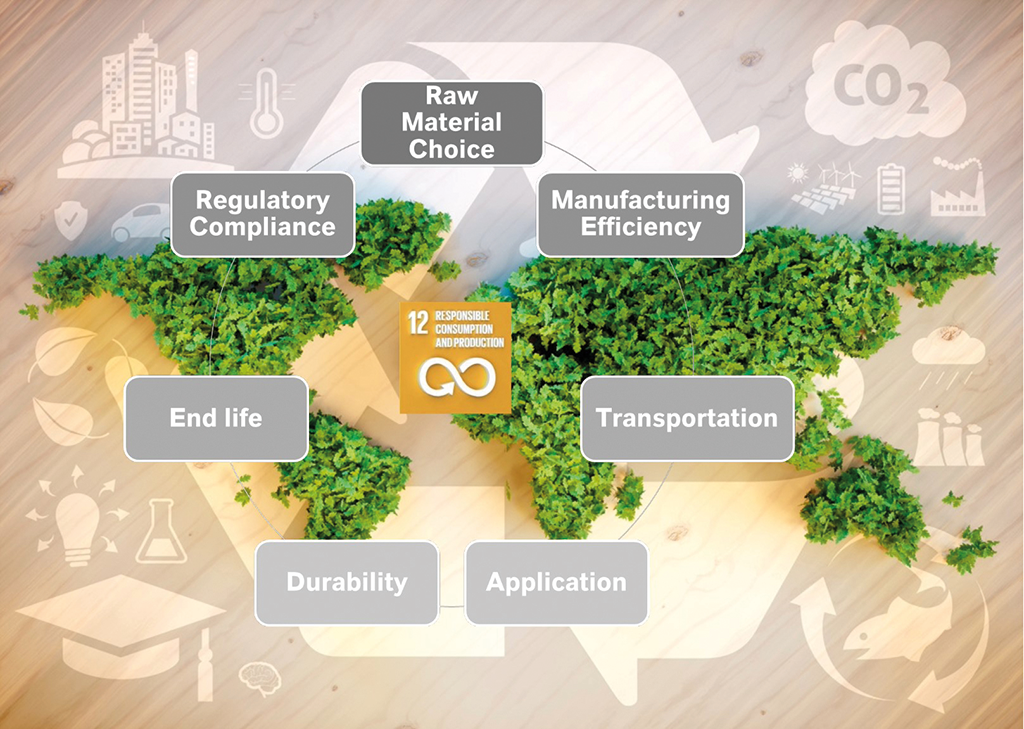
Fig. 1 – Key factors for improving a paint production in a sustainable way. Changing those parameters will influence the product sustainability but also the susceptibility to microbial growth


Consequences of biocide restrictions for the paint industry
The consequences of biocide restrictions for the paint industry are multifaceted. While these regulations aim to enhance environmental and human safety, they pose significant challenges for manufacturers. Limitations on biocide options can lead to compromised product quality and shelf-life which will result in an increasing number of spoiled products that will lead to increased customer complaints and more waste.

Sustainability in the coating industry
Coatings contribute to sustainability by incorporating resource-efficient formulations and prioritizing durability of finished goods, thus minimizing the need for frequent recoating. Therefore, sustainability is a critical aspect in the paints and coatings market that continues to shape industry dynamics. A Life Cycle Assessment (LCA) of coatings itself, examining environmental impacts from production to disposal, is influenced by various technical factors (Tab. 1). By addressing these factors, coating manufacturers can enhance the sustainability profile of their products in response to growing environmental awareness. Changing parameters within those areas will influence the sustainability of a product especially with a focus on the Environmental Footprint and the PCF.

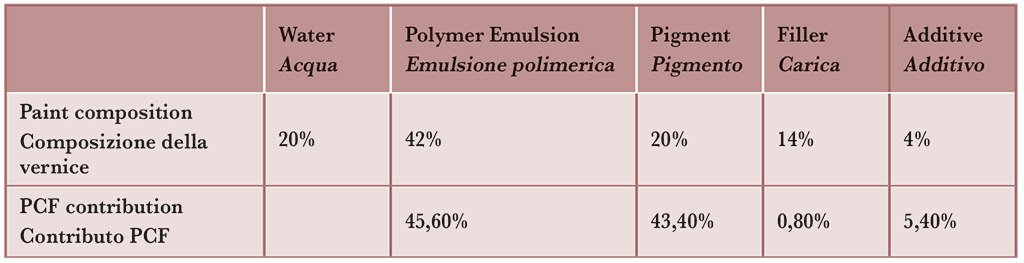
Fig. 2 – Simplified composition of a high-quality paint formulation

It is important to note that the overall life cycle impact of a product could be lowered when applying such measures, as simply the susceptibility towards microorganisms of the water-based paint will increase by e.g., more biobased raw materials, or recycle intermediates and wastewater re-use.

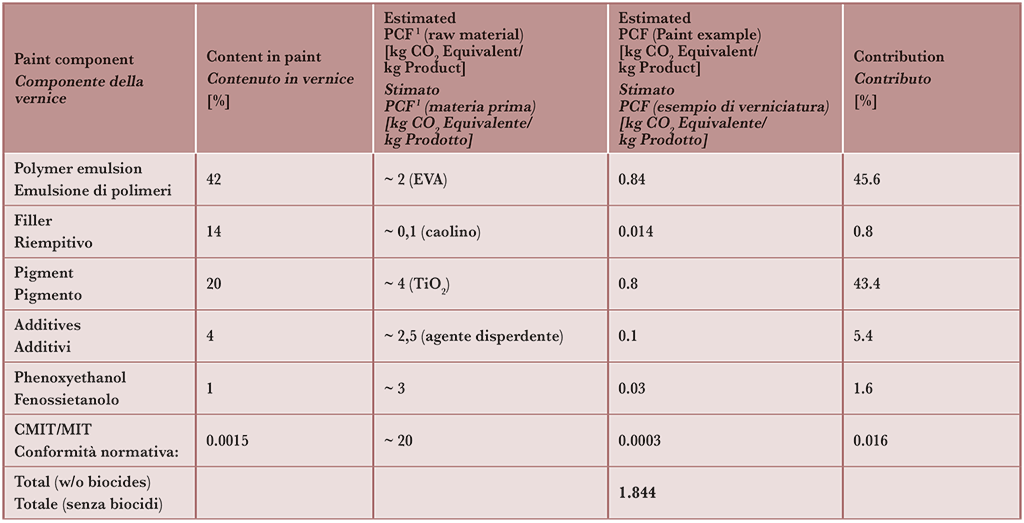
Tab. 2 – Calculation3 of a paint Product Carbon Footprint and the influence of a biocidal active substance. To simplify Lanxess focused on the CO2 impact of input raw materials (scope 3) only

Is a biocide a key driver of the product carbon footprint of a paint?
A typical paint formulation should be evaluated under the aspect of the PCF to answer this question.
Figure 2 explains the contribution of the different paint components to the PCF assessment. Whereas polymer emulsion and pigments significantly influence the PCF, the impact on other additives including biocides seems to be minor. In Table 2 the influence of a softer biocidal active like phenoxyethanol was compared with a standard biocide like CMIT/MIT. Typically, the preservation with phenoxyethanol shows efficacy only in higher dosages (approx. 1%) compared to the very efficient CMIT/MIT (0.0015%).
The calculation shows the extremely low impact of the biocidal product on the PCF of the paint which ranges below 2% of the total product PCF. The comparison of biocidal actives shows the strong impact of dosage on the paint PCF. Although CMIT/MIT has a high PCF compared to Phenoxyethanol due to its strong efficacy and low dosage, the impact on the overall paint PCF is 100 times lower.  This calculation shows that the focus for the right biocide choice should be rather related to technical feasibility and labelling than the PCF. Human and environmental toxicity which mainly drive the labelling of biocidal substances under BPR are criteria in an LCA. When applying those criteria, a rating can be done to choose the right active substance for a sustainable end application.

Results at a glance
The article underscores the pivotal role of biocides in the paint industry, emphasizing that a durable and sustainable paint product is unattainable without these essential components. The longevity and sustainability of paint rely heavily on the incorporation of biocides, as shown in the examples of water-based coatings and recycled paints. The PCF as a measure for the overall sustainability of a biocide plays only a minor role. While the benefits of biocides to prolong the lifespan of a paint product are undoubted, it has been shown that the PCF of a biocide contributes to less than 2% of the overall PCF of a standard paint product. The PCF continues to be one of the key indicators to assess the environmental impact for chemical raw materials and intermediates, for biocides other elements of the LCA such aquatic and terrestrial toxicity might be more relevant and will be the main focus for future work.

Note
1 – The PCF was created in 2023 by our in-house third-party certified automated PCF calculation tool. The LCA is based on primary data from the year 2022 by Lanxess for the production processes, while secondary data from databases (such as LCA for Experts (formerly GaBi software) version 10.7.1 and Managed LCA Content (formerly GaBi Databases) version 2023.2) and suppliers is utilized for external processes and raw materials.
– System Boundaries: ‘Cradle-to-gate’-approach including:
Raw materials purchased by Lanxess, Energy consumption, Utilities, Direct emissions from manufacturing, Transportation
of raw materials, Upstream transportation and site-to-site transportation, Treatment or disposal of process wastes and wastewater.
– PCF calculation Standards or guidelines used: ISO 14067 and the TfS (Together for Sustainability) guidelines. 
– Allocation approach used for waste incineration with energy recovery: Cut-Off Approach
   
– Limitations: the PCF covers one environmental impact. No overall statements on the environmental performance of the product can be given. Comparisons of PCFs are only possible under certain criteria if all relevant information is reported.
2 – The PCF was calculated for 100% active ingredient based on the value of the 1.5% biocidal product.
3 -All data is rounded.