Fibenol is defossilizing the future of materials and chemicals

Liisa Rohila – FIBENOL

In Estonia, where wood has shaped livelihoods for centuries, one company is reimagining its potential for the next industrial era. Fibenol is transforming undervalued hardwood and plywood industry residues into high-purity biomaterials that offer sustainable alternatives to fossil-based inputs. Its mission is both simple and bold: To help industries defossilize their value chains and accelerate the transition to net zero. Born in 2016 as a spin-off from Graanul Invest Group, Europe’s largest pellet producer, Fibenol began with a question. Pellet production was thriving, but vast amounts of hardwood residues were overlooked. Could those leftovers become more than fuel? That question sparked a journey of science, persistence, and innovation. The discovery of Sunburst™ technology in the lab – and its eventual scale-up through the EU-funded Sweetwood project – set the company on a path toward redefining industrial chemistry.


Innovation as courage
Innovation isn’t just about patents or machinery. It’s about bravery. As Peep Pitk, Chief Strategic Business Development Officer, put it: “For us, innovation is not just about technology, it’s about courage. The courage to test, fail, and start again. It’s about challenging fossil-based norms, proving that nature-based solutions can perform at scale, and making them economically viable. Innovation is both our compass and our engine, guiding us toward a better, cleaner future”.
This philosophy is embedded in the company’s DNA. Every breakthrough – from the lab to the demo plant – has been proof that confidence and persistence can transform industries. Fibenol is showing that nature-based solutions don’t have to remain experimental; they can be scaled, reliable, and profitable.

A technology like no other
What truly sets Fibenol apart is its proprietary Sunburst™ pre-treatment technology. Unlike conventional methods, Sunburst™ enables over 90% valorization of woody biomass, reuses up to 95% of process water, and operates on renewable energy in a zero-waste concept. By combining mechanical force, pressure, and minimal chemicals, the process yields next-generation biomaterials: cellulosic sugars; specialty cellulose; and, Lignova® lignin. Each carries natural properties, verified low CO2 footprints, and wide industrial applications – from construction materials to plastics, coatings, and resins. This isn’t incremental change; as Peep shares, “This is not incremental change, it’s a new industrial model”.

The turning point
The decisive moment in the company’s growth came when its lab-scale trials proved scalable. “The real turning point came when lab-scale trials proved that Sunburst™ could be scaled into industrial practice”, Liisa Rohila, Marketing Communications Manager, explains. “That leap, from an idea in research labs to a pilot, and finally to a demo plant that attracted EU support, validation from hundreds of industry pilots, and recognition through multiple industry leaders. It was the proof we needed to show that our solution wasn’t just possible, it was scalable”.
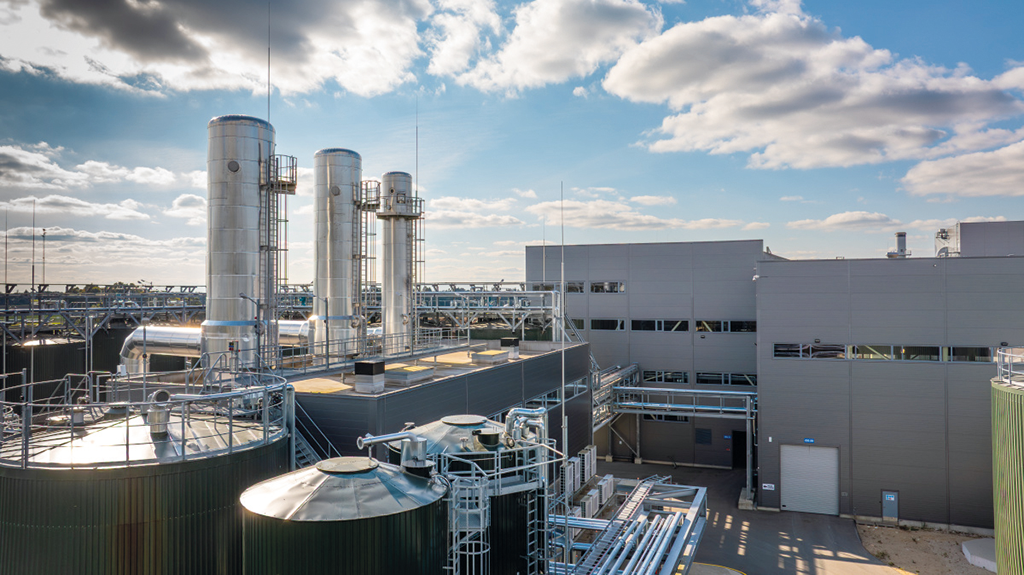
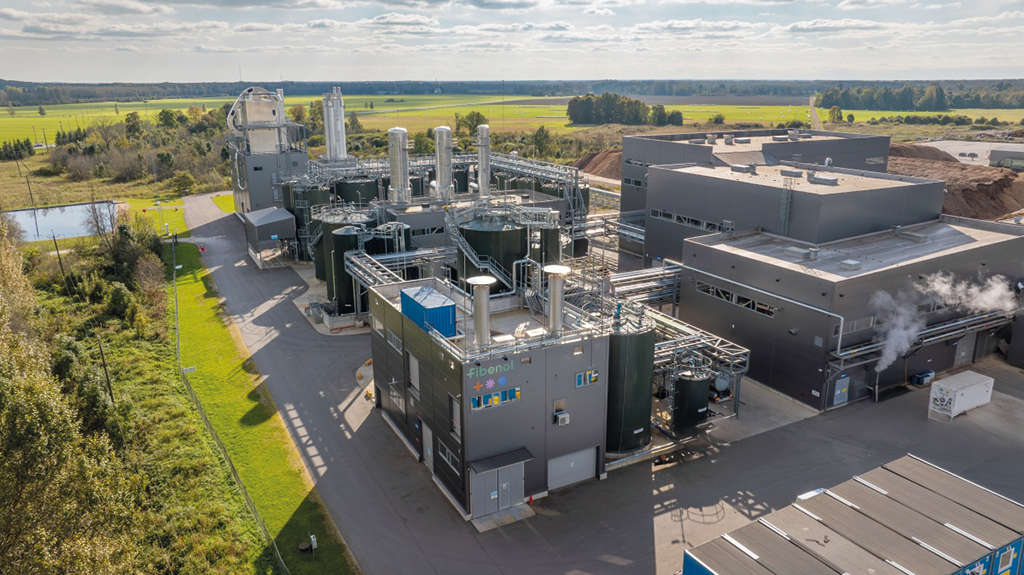
That demo plant, commissioned in 2024, is now more than a facility – it’s a hub for research, partnerships, and validation. It has become the proof-point that our vision isn’t hypothetical; it’s happening.


Scaling the vision
The Estonian demo plant is only the beginning. By 2030, Fibenol plans to open its first large-scale biorefinery in Latvia, ten times the size of today’s operation. The long-term vision? To export the Sunburst™ technology globally, bringing it to regions where wood residues are underused and turning waste into new sources of industrial value. That ambition underscores the company’s role not only as a materials company but also as a technology exporter, reshaping supply chains worldwide. By offering scalable solutions, Fibenol is helping industries transition away from fossil dependence while boosting local economies. The company collaborates closely with research institutions, participates in EU innovation projects, and uses its demo plant as a testing facility for future R&D. This role places Estonia and the Baltic region firmly on the map of global bio-innovation, with Fibenol at the center as both pioneer and connector.

Coatings industry
WoodCell, Fibenol’s crystalline cellulose, is a 100% bio-based material offering solutions for next-generation paint and coating formulations. Produced with its innovative Sunburst™ pre-treatment process, it converts EU-sourced, low-grade wood into novel biomaterial like crystalline cellulose, while combining strong performance with sustainability. In coatings, WoodCell acts as a viscosity modifier, adjusting the thickness and flow of the formulation. This keeps paints stable in the can while allowing them to spread easily when applied. Its thixotropic behavior means the coating becomes more fluid during brushing or spraying, then quickly regains thickness once applied preventing runs or drips and ensuring an even, uniform layer. The anti-sagging effect helps maintain a smooth surface on vertical applications, avoiding uneven build-up. This crystalline cellulose can also contribute to a matte surface finish, providing a refined, non-glossy appearance without the need for additional additives. By delivering these key performance benefits in a renewable, bio-based form, this crystalline cellulose offers the coatings industry a sustainable and high-performing alternative to fossil-based additives.

Defossilizing tomorrow
Fibenol’s journey – from overlooked hardwood residues to world-class biorefinery technology – shows what happens when boldness meets science. It is more than a company; it is a symbol of industrial transformation, a living example of how regional expertise can have global impact. By turning waste into value and daring into chemistry, the company is proving that the path to net zero runs through innovation, collaboration, and relentless belief in better solutions. The message is as bold as it is clear: the future doesn’t need fossils. It needs courage, technology, and supportive regulations to inspire the bioeconomy.

“Main source of the article: InnovateTM Estonia”.