Massimo Calovi, Department of Industrial Engineering – UNITN
The research article is an extensive, thorough investigation focused on advancing the thermal efficiency of organic roof-coatings through a dedicated emphasis on fortifying the durability of thermochromic pigments. These specialized pigments possess a unique capability to alter their color in response to temperature fluctuations, which in turn influences the absorption and reflection of solar radiation, thereby impacting the overall thermal regulation within buildings. However, despite their potential to optimize thermal performance, an enduring challenge lies in their susceptibility to degradation over time, hindering their sustained efficacy in maintaining the desired thermal properties essential for these coatings. The primary objective of this ambitious and comprehensive research initiative was to develop innovative methodologies and design strategies that would effectively enhance the durability of thermochromic pigments, ensuring their prolonged functionality and efficacy. This multifaceted endeavor involved a systematic and rigorous exploration of diverse formulations and tailor-made design adaptations meticulously engineered to bolster the resilience of these pigments against an extensive array of prevalent environmental stressors.
Sample production and characterization
The study delves deeply into the realm of thermochromic pigments embedded within coatings, unravelling an extensive and intricate exploration of their composition, behavior, and application within various environmental contexts.
At its heart, this research delves into the microstructural intricacies of thermochromic pigments, unveiling their distinctive features, particularly their spherical particle composition. These particles, with a diameter less than 10 µm, predominantly comprise carbon and oxygen, as revealed by EDXS elemental analysis. The fascinating property of these pigments lies in their transformative ability—shifting from a colored state to complete transparency at the critical temperature of 28° C. This unique behavior, well-established in prior research, underscores the pivotal role of these spherical particles in dictating the pigments’ chromatic alterations, displaying intriguing potential across a spectrum of applications.

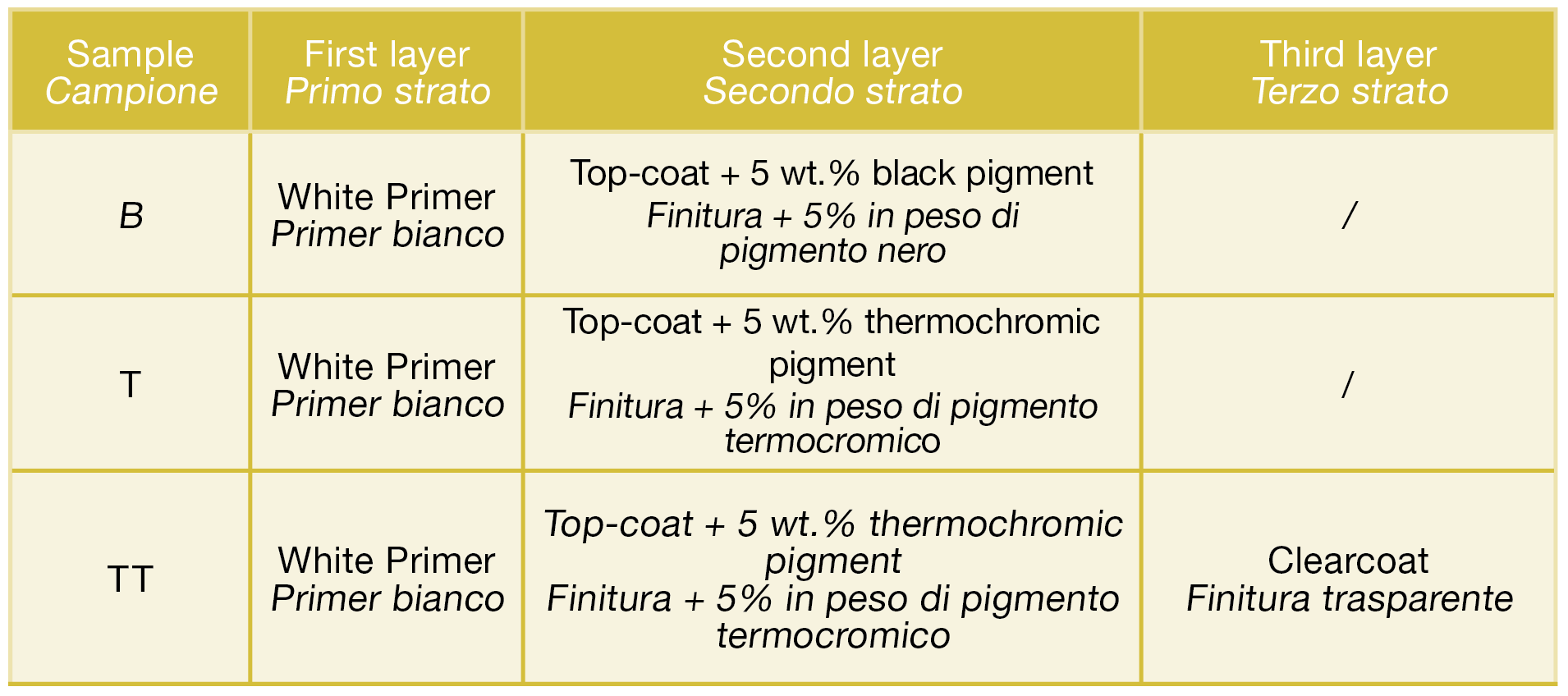
Thus, the study meticulously examines three distinct coating samples (B, T, and TT), each engineered with specific layers and pigments, as described in Table 1. The comprehensive analysis delves into their structural differences, coating thicknesses, and the resultant aesthetic variations.
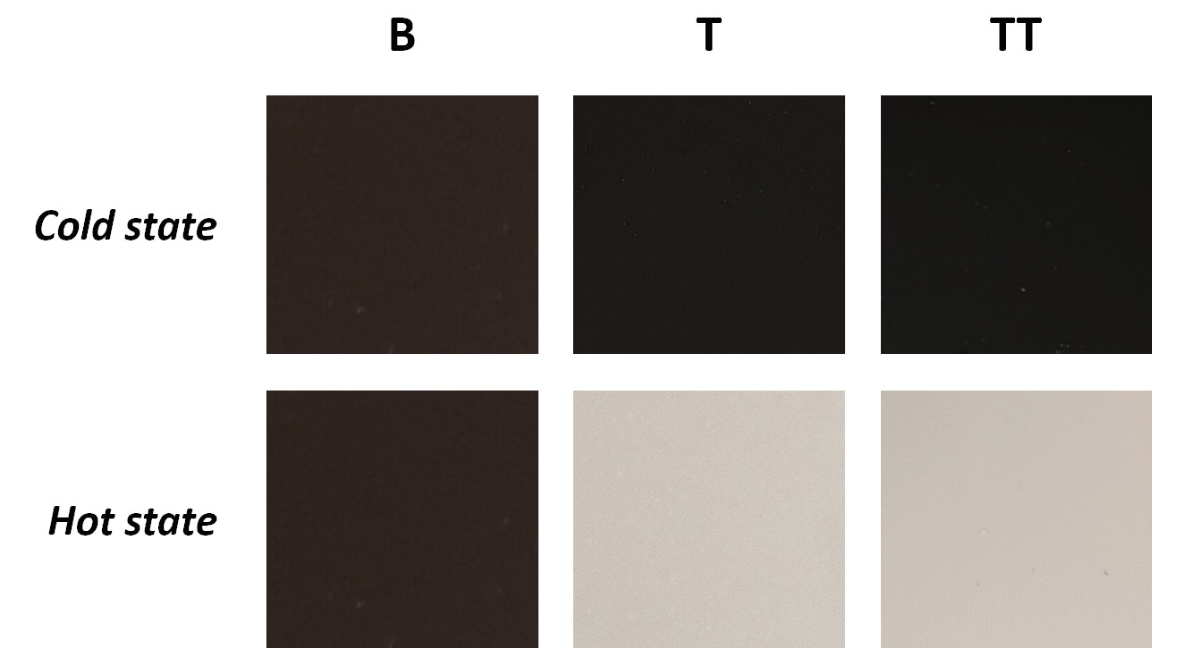
These distinct characteristics are intrinsically linked to the types of pigments utilized and the compositions of the layers, highlighting the profound influence of formulation on visual attributes and structural integrity. Figure 1 reveals the appearance of the three series of samples in both the cold and hot state.
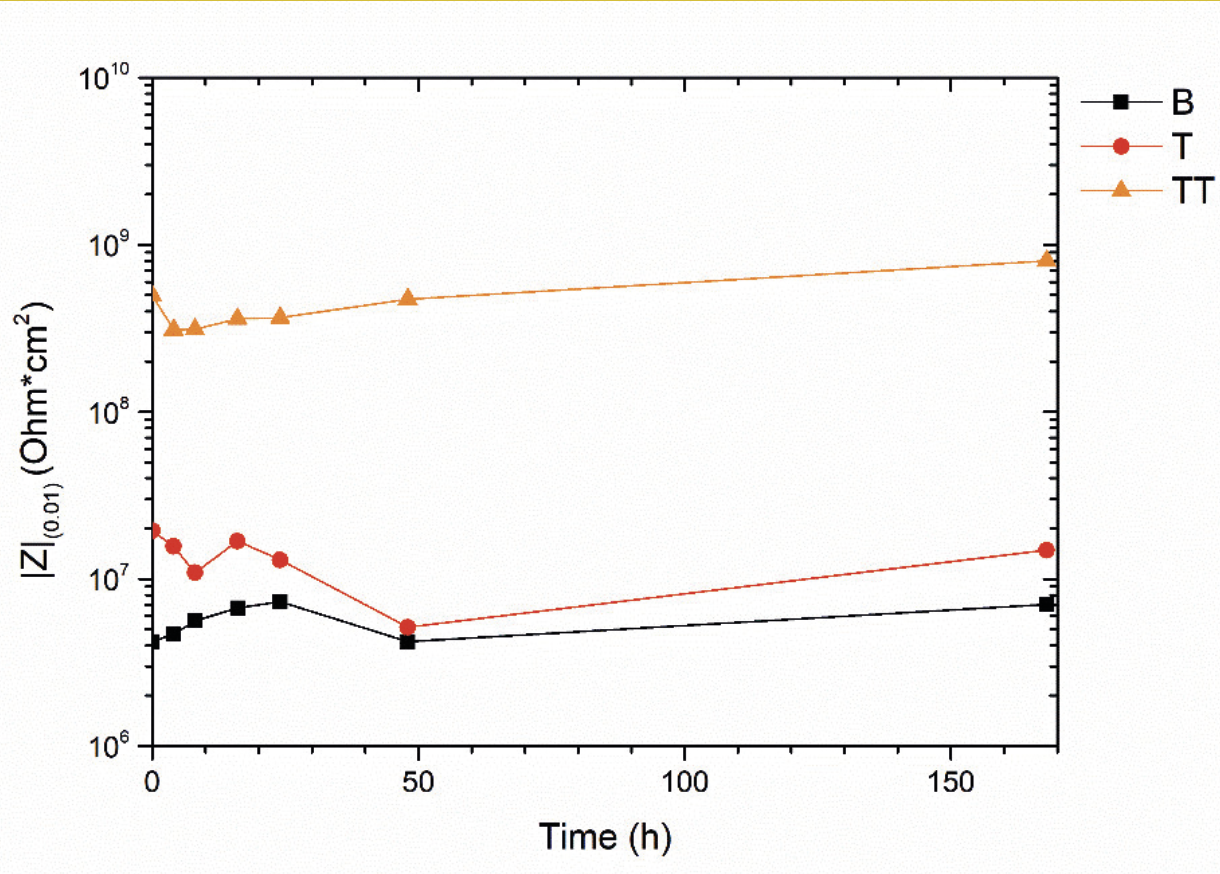
Expanding its horizon, the research delves deep into the protective attributes of these coatings, employing sophisticated Electrochemical Impedance Spectroscopy (EIS) to glean profound insights. Notably, sample TT emerges as a standout, showcasing superior protective abilities attributed to the inclusion of a clearcoat layer. This additional layer fortifies the coating against environmental stressors, enhancing resilience and augmenting the longevity of the coatings, as demonstrated by the graph in Figure 2.

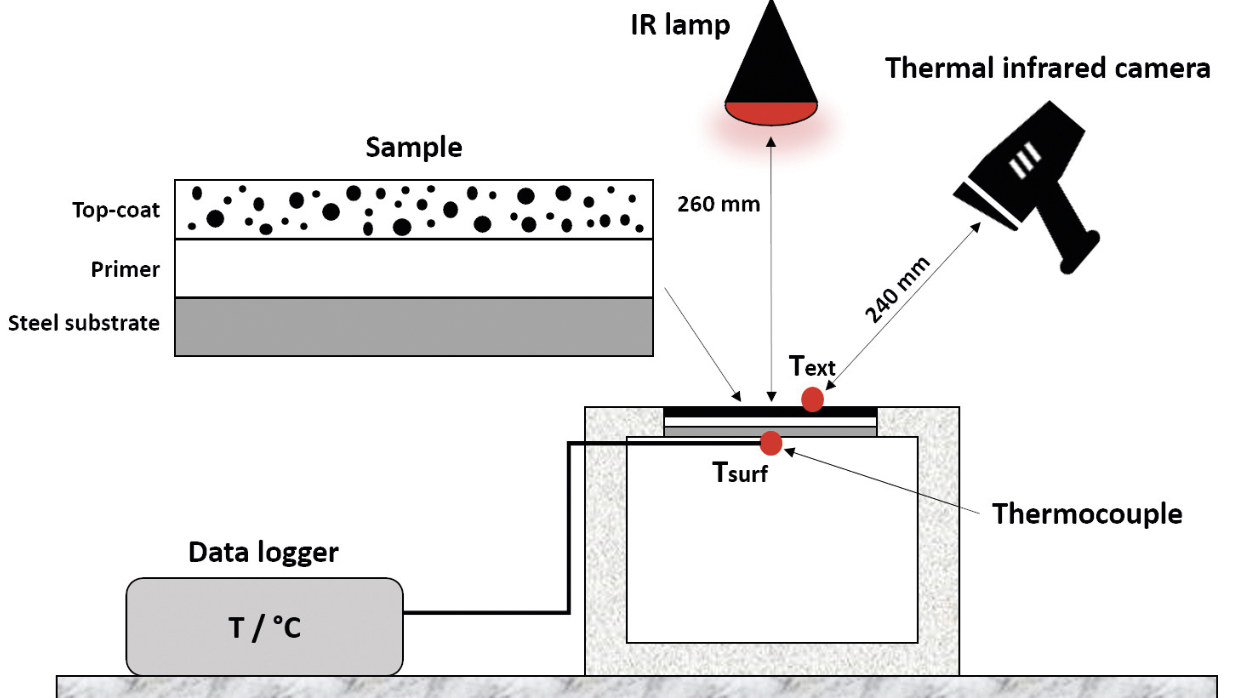
Moreover, the study meticulously scrutinizes the coatings’ durability under diverse stressors, including exposure to varying climatic conditions, UV-A radiation, and soiling/weathering. The setup illustrated in Figure 3 was used to evaluate the thermal characteristic and durability if the coatings. The findings are riveting, with sample TT exhibiting exceptional resilience in preserving the thermochromic properties of the pigments under adverse conditions. Despite minor degradation upon UV-A exposure, the clearcoat in sample TT plays a pivotal role in fortifying the durability and functionality of the thermochromic pigments, surpassing the capabilities exhibited by sample T.

During the degradation test, distinct behaviors emerge among three coating samples—B, T, and TT—highlighting variations in temperature thresholds and color stability. Sample B, with its black coating, exhibits higher temperatures due to greater energy absorption, while samples T and TT, lighter in color, absorb less energy, resulting in lower temperatures on their external surfaces. Sample TT, distinguished by an additional clearcoat, demonstrates enhanced protective capabilities, maintaining stability in chromogenic properties.
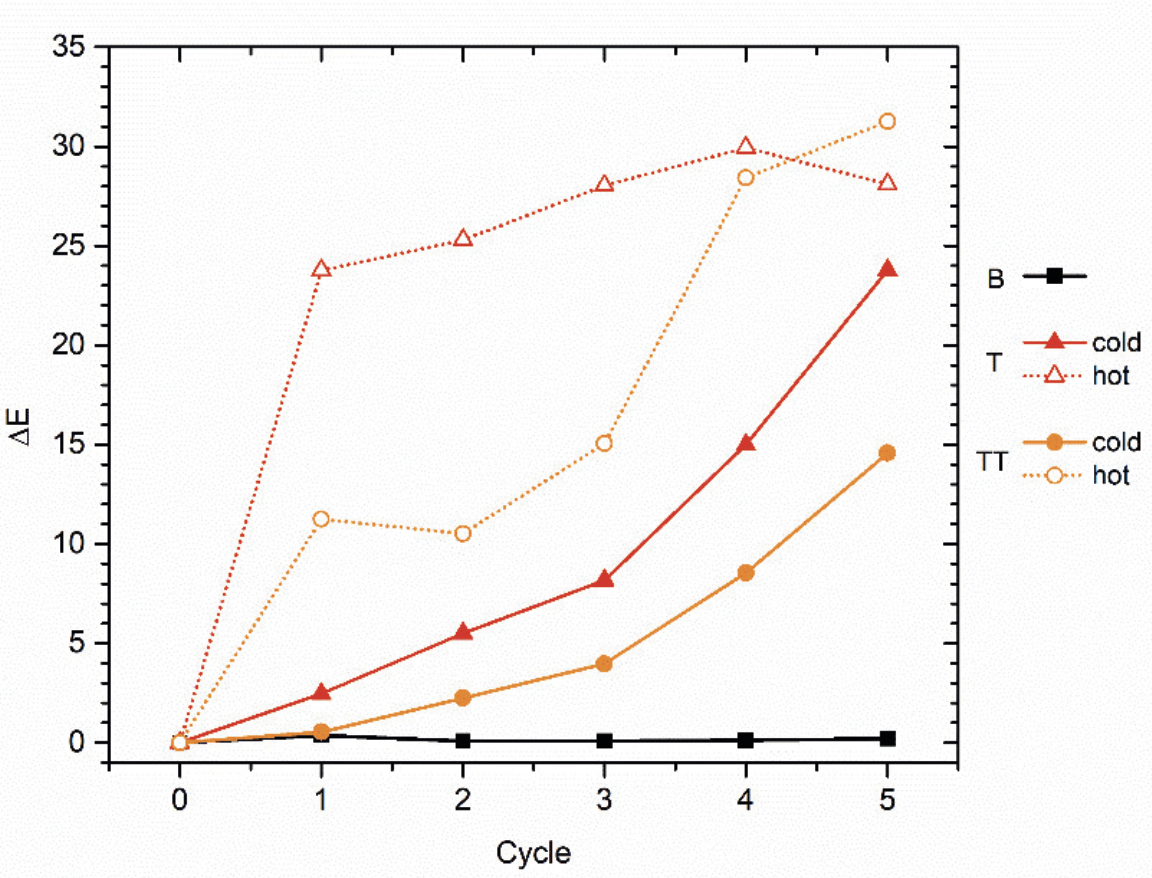
Analyzing the coatings’ chemical and structural changes through ATR measurements before and after degradation cycles reveals minimal alterations. The polyurethane-acrylate matrix of the transparent top-coat paint remains resilient against UV radiation, sustaining the integrity of the coatings. However, colorimetric analyses after each degradation cycle unveil notable changes in samples T and TT, as represented in Figure 4, indicating a reduction in color stability over time.

Exposing the thermochromic pigments to UV-A radiation for 100 hours reveals structural degradation observed through SEM and stereomicroscope images, indicating a decline in their thermochromic functionality. Quantitative colorimetric evaluations further confirm this degradation, showcasing reduced darkness in the pigments in both thermal states, attributing the loss of thermochromic efficiency to structural changes induced by UV radiation.
The findings underscore the pivotal role of the clearcoat in sample TT, mitigating pigment degradation and preserving thermochromic activity over time. Consequently, sample TT displays superior thermal performance compared to sample T, emphasizing the clearcoat’s role as a protective shield for the thermochromic pigments.

Conclusions
In essence, this exhaustive study accentuates the promising potential of these coatings, particularly sample TT, in upholding the efficiency of thermochromic pigments and fortifying protective attributes. Its implications span across industries, offering insights into the future of responsive, resilient, and adaptable coating technologies.
This research sets a robust foundation for future studies, inviting further exploration into optimizing formulations, enhancing protective qualities, and expanding the application domains of these innovative coatings in diverse environmental settings.
The comprehensive nature of this study serves as a springboard for future endeavors in the realm of responsive coatings and materials, promising advancements in functionality, resilience, and adaptability across various industries.
Rreferences
[1] Calovi, M., Zanardi, A., & Rossi, S. (2023). Improvement of the thermal efficiency of organic roof-coatings through design aimed at increasing the durability of thermochromic pigments. Progress in Organic Coatings, 185, 107928.