Development of new bio-based additives for sustainable functional coatings

Blai López Rius AIMPLAS

Sustainability is a key factor in the coatings sector. The valorization of biomass emerges as an attractive approach, enabling the production of new materials derived from it. For this reason, AIMPLAS is developing novel bio-based additives with different functional properties for the formulation of high value-added, sustainable functional coatings.
One example of such bio-based additives is the development of chitosan–phytic acid polyelectrolytes, yielding a bio-based material that functions as a flame-retardant filler for fire-resistant paint formulations. The method for obtaining this polyelectrolyte complex (PEC) via mechanochemistry using continuous twin-screw technology has been patented by AIMPLAS.
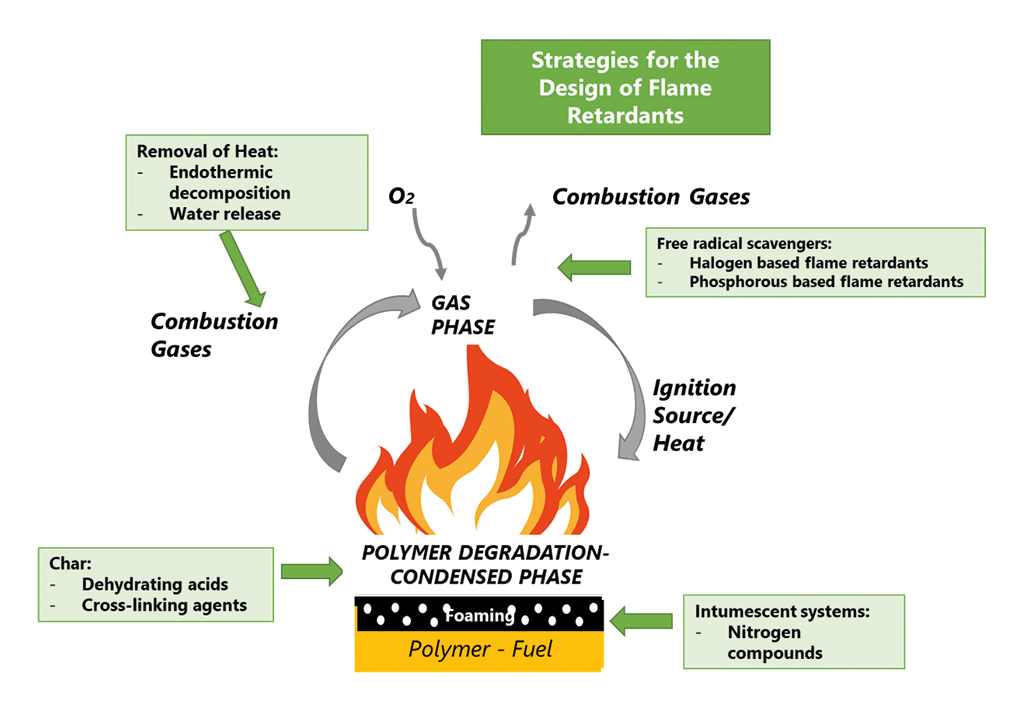
The PEC combines the phosphorylated groups of phytic acid, which can be sourced from cruciferous plants, and the nitrogenated groups of chitosan, which can be obtained from insects, algae, crustaceans and fungi. These act synergistically as an intumescent flame-retardant system, operating in both the gas and condensed phases:

• gas phase: Dehydrates the surface of the flammable material, releasing an inert gas that dilutes the oxygen concentration in the air.

• Condensed phase: Acts as a foaming agent, forming a char layer that protects and insulates the flammable substrate.

Fig. 1

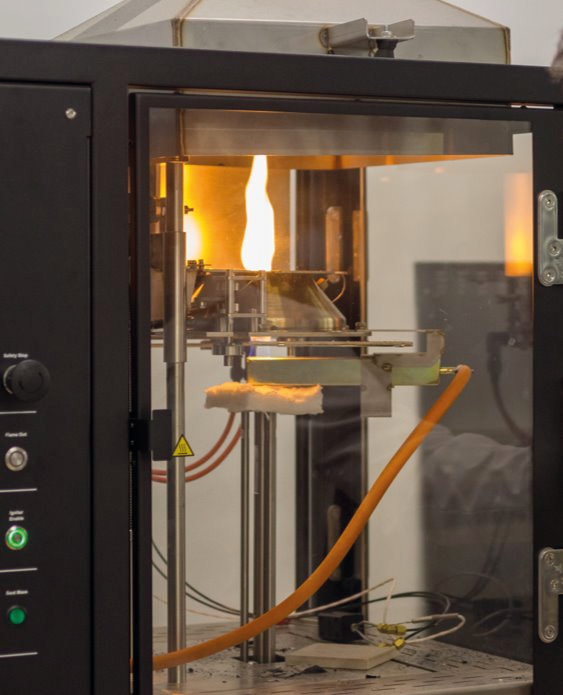
This bio-based flame-retardant additive has been validated in thermoplastics (polyethylene, polyamide, etc.), thermosets (epoxy resin, polyurethane foam, etc.) and coatings (acrylics), achieving a Heat Release Rate (HRR) reduction of around 20–40%, depending on the substrate and application method. It also works synergistically with other commercial flame retardants, providing higher HRR reductions than when using commercial additives alone.
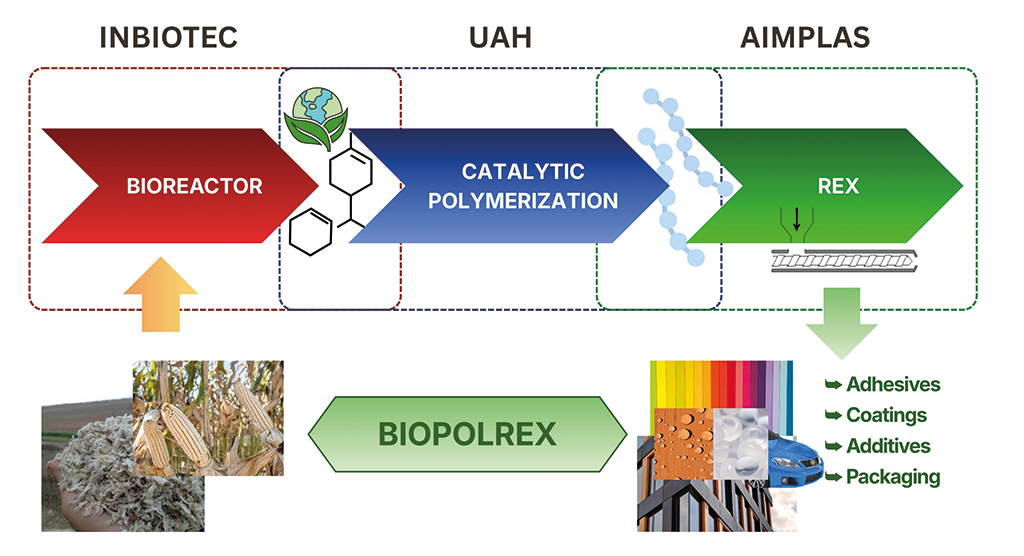
Another example of bio-based additives is the development of polyterpenes, obtained through the polymerization of terpenes and terpenoids, with applications as UV-protection and antimicrobial additives. Terpenes can be sourced from agri-food waste, such as limonene from citrus residues, eucalyptol from eucalyptus or other aromatic plant residues, or pinene from conifer or rosemary residues. Additionally, the synthesis of these compounds employs reactive extrusion (REX) technology, which requires minimal solvent use, offering a more sustainable alternative to conventional synthesis processes.

Fig. 2

Polyterpenes can serve as UV-protection additives due to their ability to react with free radicals, mitigating the impact of UV radiation on coatings and preventing their degradation. This is particularly useful in sectors such as construction or packaging.
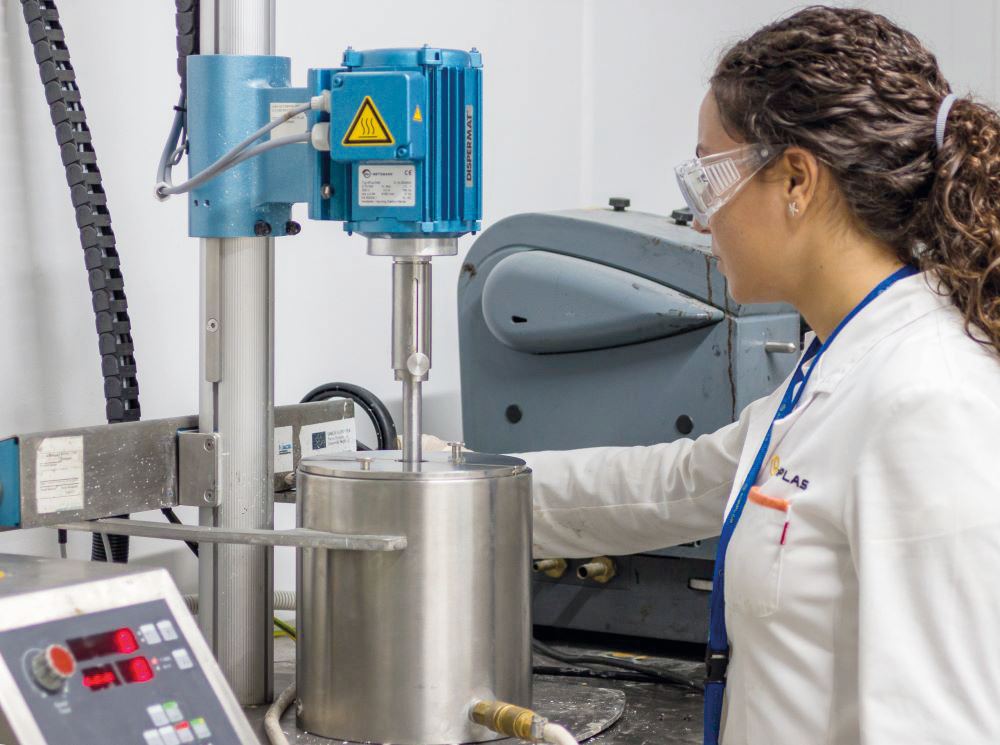
These UV-protection additives have been validated in food-contact PET coatings, achieving a reduction in yellowing of around 35%. Polyterpenes can also be used as antimicrobial additives, demonstrating activity against microorganisms such as E. coli and S. aureus. Their antimicrobial mechanism is based on their migration to the surface of the material, where they attack present microorganisms. These properties are especially relevant in medical applications.

Fig. 3


These antimicrobial additives have been validated in coatings applied to plastic films, achieving almost 100% reduction in E. coli growth and up to 60% reduction in S. aureus.
In summary, bio-based functional additives open a wide range of possibilities in sectors such as packaging, construction, transport and healthcare, where functional and sustainable coatings are required.
At AIMPLAS, the Technological Institute of Plastics, several R&D projects are being carried out on this topic. One example is the REFUGI project, aimed at developing sustainable flame retardants for coatings on wood substrates.

Fig. 4


REFUGI is funded by IVACE+i through the aid programme for technological centres of the Valencian Community for the development of non-economic R&D projects in collaboration with companies, co-funded by the EU under the ERDF Programme of the Valencian Community 2021–2027.
Another example is the BIOPOLREX project, which aims to obtain polyterpenes via reactive extrusion techniques for use as high value-added additives. BIOPOLREX is funded under the R&D Project Call “Research Challenges”, part of the National Programme for Scientific and Technical Research and Innovation 2017–2020 of the Spanish Ministry of Science, Innovation and Universities.