Roberta Pecchini – IMCD Italia
Silane Terminated Polymers
The current trend of architects, engineers and designers for flooring of both indoor and outdoor spaces, both in commercial and residential environments, involves the application of textured effects, with a preference for the design of industrial flooring, with visible concrete effects, and with the use of sustainable products.
In this context, the new modified silane polymers proposed by Wacker, Silres® BS 6920 and/or Silres® BS 6921, allow for the formulation of floor coatings with numerous advantages: one-component product, ready to use, with no need to mix 2 components on site; ease of application with no constraints of residual moisture content in the floor; speed of application and use of the flooring, because it is quick to dry by crosslinking; excellent adhesion to all cement substrates, but not limited to them; excellent resistance to stain; excellent abrasion resistance; solvent-free, VOC less than 0.5%; resistant to weathering and therefore also suitable for outdoor applications; resistant to contact with high-temperature materials.
This novel polymer is an α silane-terminated polyether, where silane units are at the extremes of the polyether polymer chain and are very reactive, crosslinking quickly. Atmospheric humidity reacts with the polymer, and with the addition of an appropriate catalyst in the formulation, quickly forms a three-dimensional siloxane -network.
Stone Carpet: Definition, Formulation and Application
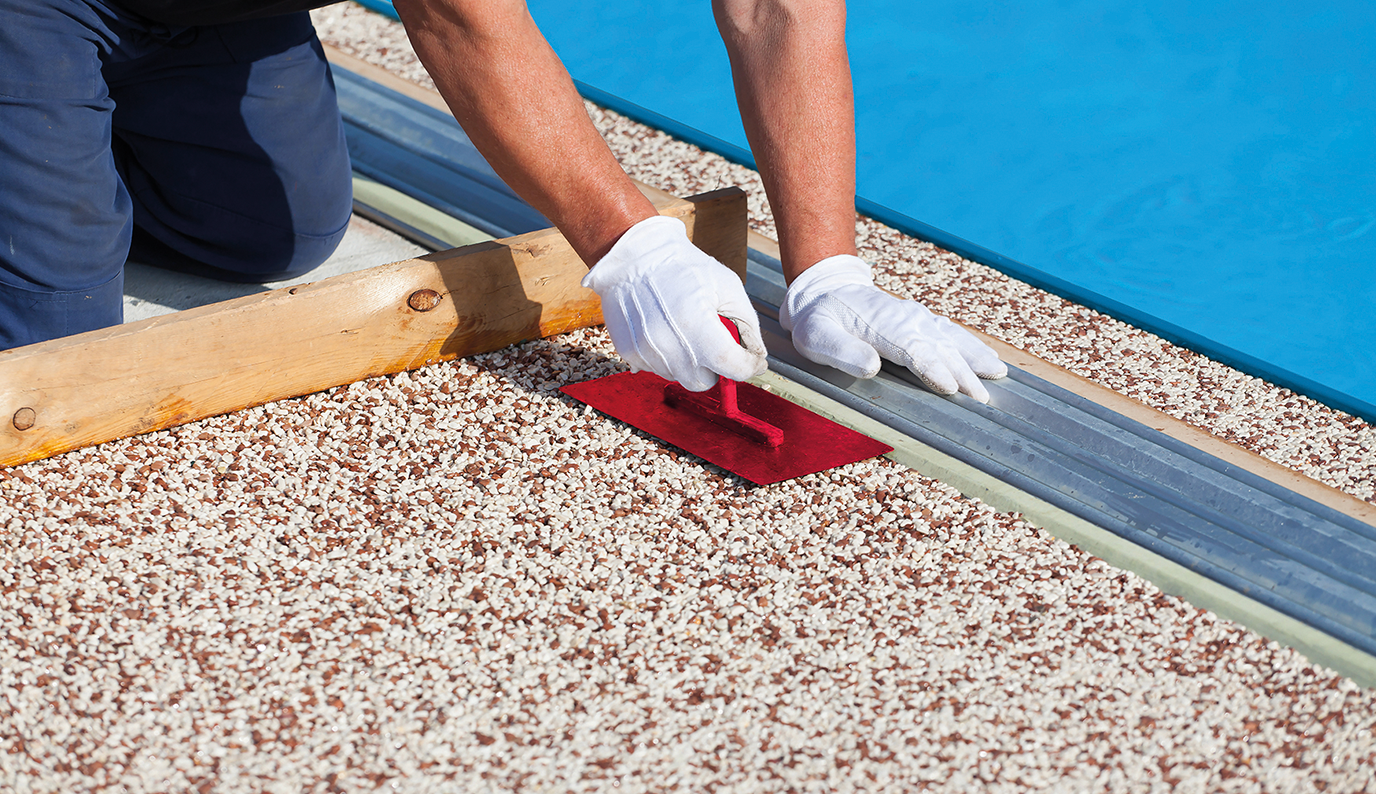
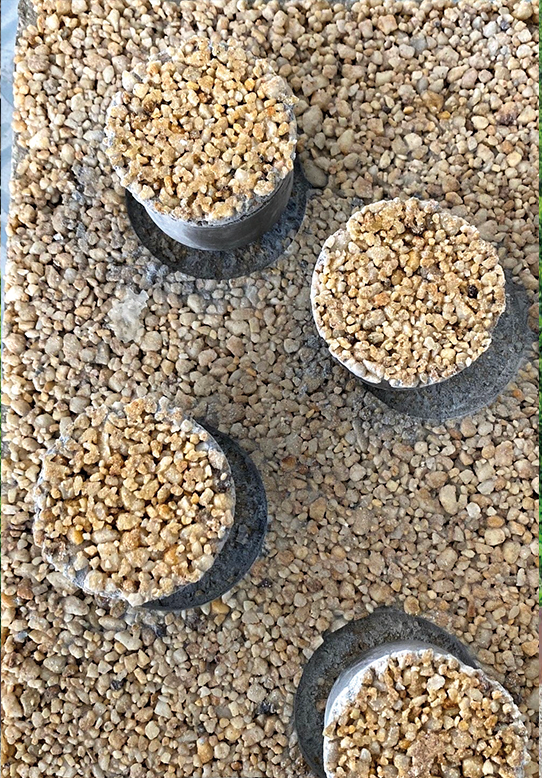
Stone Carpet is a permeable and draining flooring system composed of natural stones (of appropriate granularity) bound with a resin. The flooring is without joints, suitable for foot traffic, non-slip, very resistant to stains and chemicals, with high aesthetic possibilities because it allows you to customize colors and decorations, with a natural materic appearance, is easy to apply and maintain, and is very durable.
It is a very versatile system that combines high technical performance with design, creating unique, natural surfaces in line with ecological requirements.
The innovation of the binder based on Silres® BS 6920 and Silres® BS 6921 makes it easy to formulate Stone Carpet with high mechanical performance, excellent adhesion, and prolonged durability, combined with an extremely easy preparation and application of the system.
Among the different grades of polymers modified with silane, Silres® BS 6920 has higher crosslink density and is stiffer than Silres® BS 6921, which is more flexible.
The combination of the 2 polymers, in different ratios, allows for optimization of the desired final properties. In the formulation of the coatings system, it is recommended to use a 50:50 ratio in order to guarantee the necessary flexibility of the binder to avoid the formation of cracks, considering the -deformation of the cement structures, in particular for outdoor applications, and to achieve the mechanical properties requirements for foot traffic.
PPolymers require the addition of a catalyst, which also acts as an epoxy-based adhesion promoter, also suitable for outdoor applications, and which hydrolyzes in the presence of moisture in an autocatalysis reaction. However, the addition of a stronger catalyst, such as KAT XK4006, based on TMG (tetramethylguanidine), is also required to make the crosslinking process fast at all temperatures.
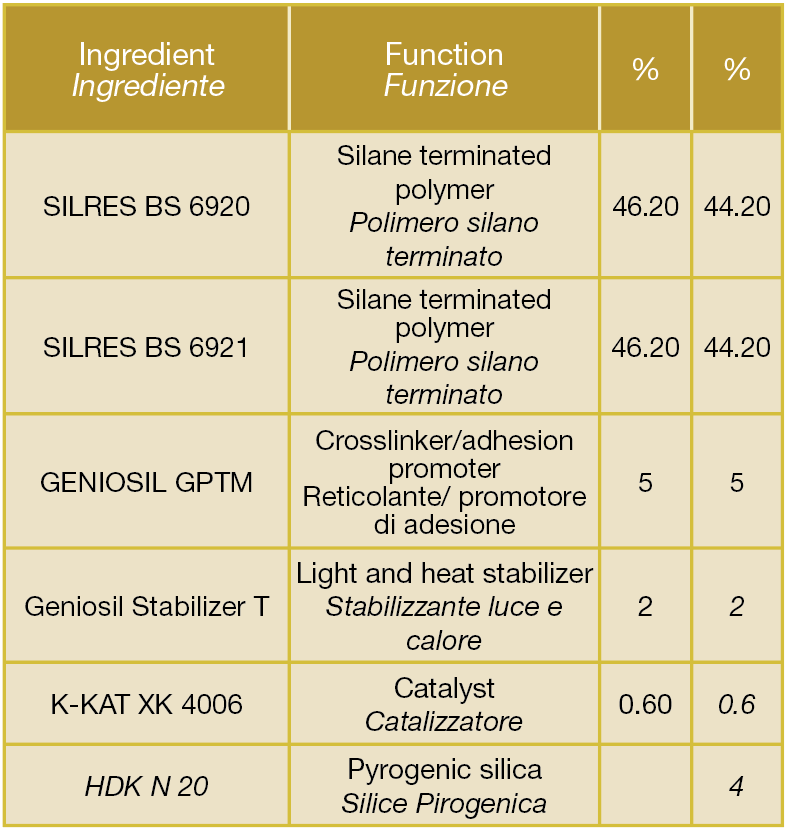
The system has low viscosity (~ 100 mPas) but can be slightly thickened to facilitate application on vertical or very thick surface in a single coat. In this case, hydrophilic pyrogenic silica may be used, up to 5% of the total binder formulation.
Finally, considering the possibility of outdoor application, the addition of a heat and light stabilizer is necessary, which guarantees excellent performance over time with a dosage equal to 2% of the total formulation.
The formula indicative of the single-component binder based on modified silane polymer can be summarized in (Tab.1)
Since the ingredients are liquid and not particularly viscous, apart from pyrogenic silica, mixing is very simple, at low speeds, and only in the case of pyrogenic silica dispersion slightly higher shear forces and little longer times are required.
The application on site involves the application of a first coat of primer with the same binder to be used for the Stone Carpet, with a short-hair roller and in a very thin thickness (100 µm maximum), which, depending on the absorption of the substrate, corresponds to consumption of 30-80 gr/m2.
The Stone Carpet mixture is then prepared, mixing the natural aggregates (with appropriate granularity size curve, free from condensation) and the binder, in ratios equal to 100 parts of aggregates and 5-7 parts of binder. Mixing is fast until the mixture is fully homogenized and then applied to the surface previously treated with the primer, starting a few hours after the primer is applied. The material must then be compacted with an appropriate straightedge and finally leveled. The application thickness can be variable depending on the type and use of the surface and the designer’s requests (from 1.5 cm to 10 cm), but in general it is applied with a single coat, and in the case of high thicknesses the first layer can be made thicker and the second only for leveling and finishing.
Stone Carpet: Properties
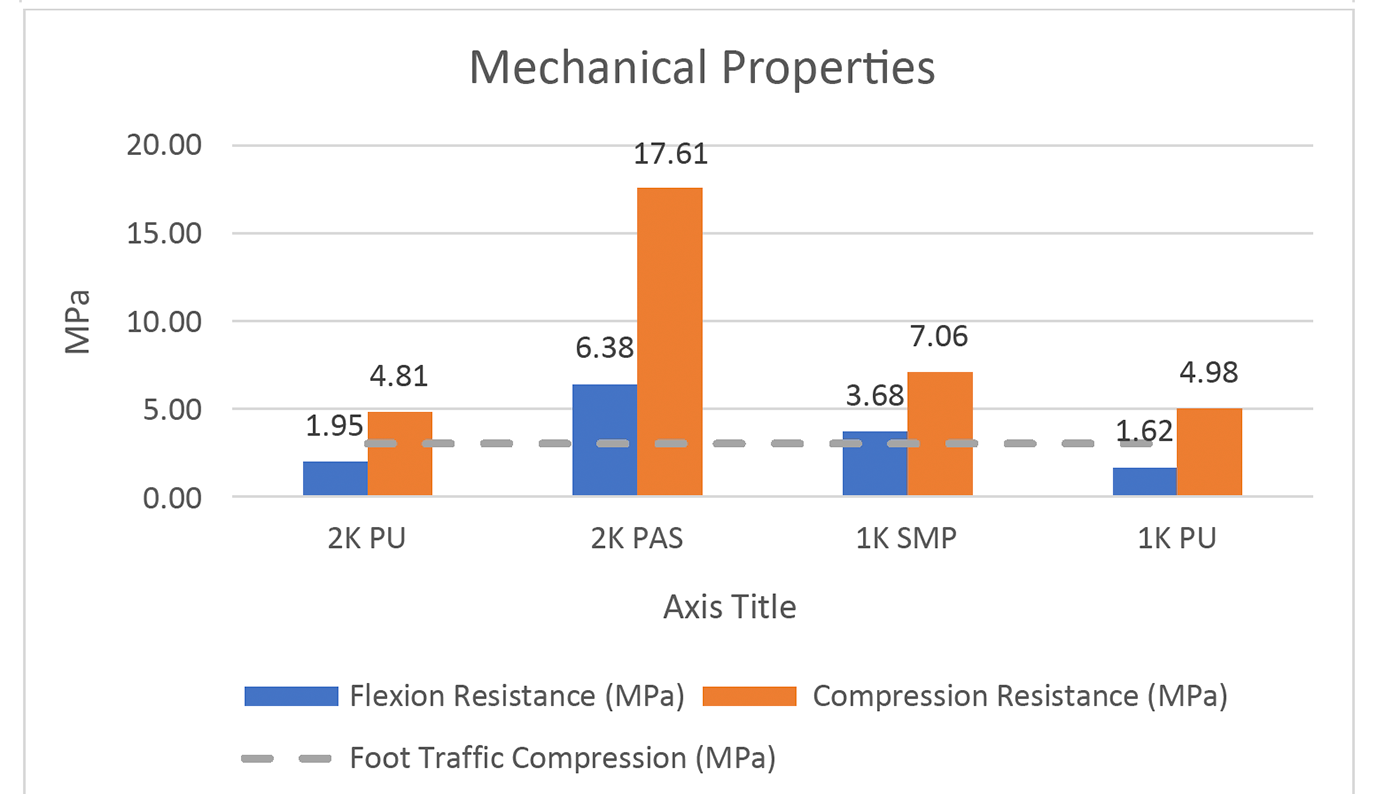
The binder formulated for the Stone Carpet is flexible, similar to traditional two-component polyurethanes systems (2K PUs), but superior to two-component polyaspartic resin systems (2K PAS). This feature affects the mechanical properties of the Stone Carpet, measured at 14 days, in terms of flexural and compressive strength.
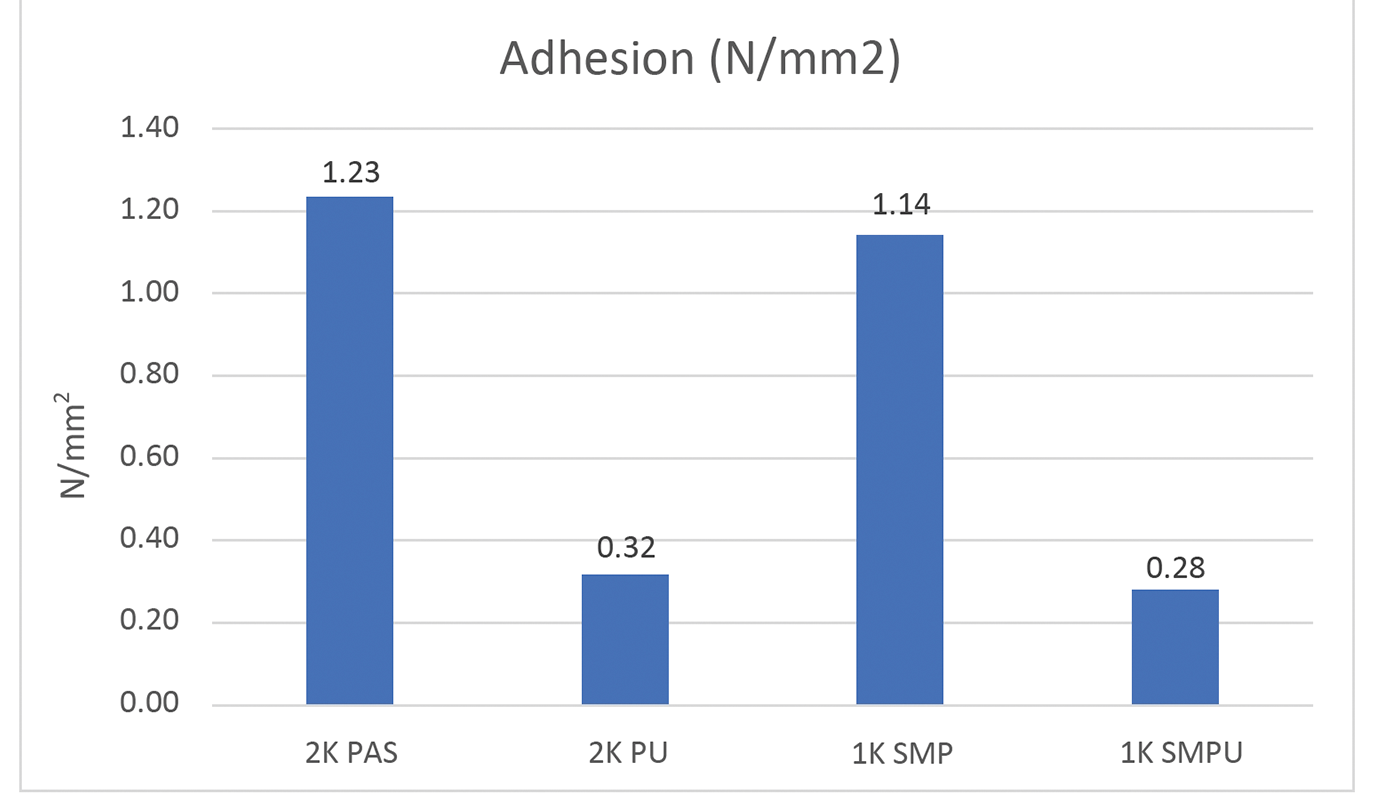
The flexural strength of the system based on silane modified polymers (1K SMP) is equal to 3.68 MPa, higher than polyurethane systems, and lower than the polyaspartic system which is too rigid and therefore not suitable for all applications. Similarly, the compressive strength of the modified silane polymer system (1K SMP) has a compressive strength of 7 MPa, higher than polyurethane systems, which have values slightly higher than the minimum value required for foot traffic, which must be ≥ 3MPa, and lower than two-component polyaspartic systems. The adhesion strength measured by Pull Off testing after 14 days shows high values for the modified silane polymer system (1K SMP), much higher than polyurethane and similar to the polyaspartic system.
Finally, a fundamental property is the resistance to atmospheric aging, measured by accelerated aging in a QUV chamber, with a QUV B type lamp, and with alternating cycles of sun and condensation:
UV 0.71 W/m2 60° C 4h
Condensation 50° C 4h
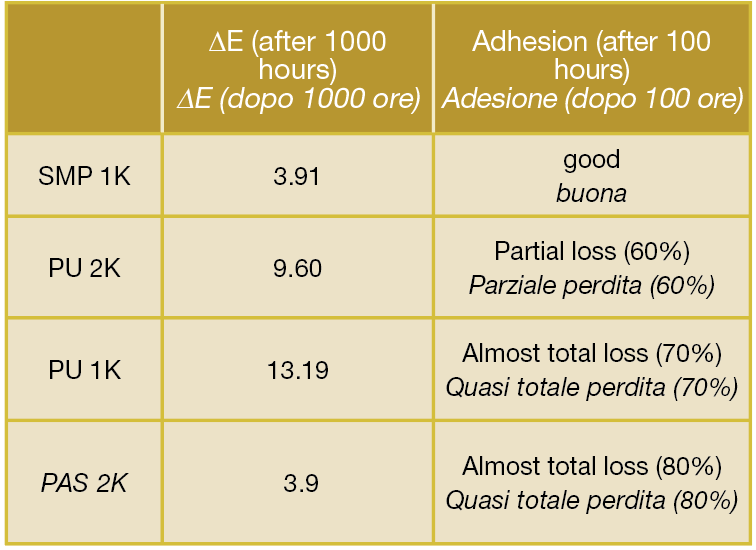
In this test, the polyurethane system (2K PU) shows yellowing of the binder after a short time (200 hours) and at the same time loss of adhesion of the aggregates; the system based on polyaspartic polymers yellows from 400 hours of testing and shows total loss of adhesion after 100 hours, while the system based on modified silane polymers does not yellow, even after 1000 hours and still shows good adhesion to the support.
CONCLUSIONS
Wacker’s modified silane polymers offer the ability to formulate premium, high-performance cement floor finishes with advantages in terms of increased production and application efficiency.
Even more innovative is the use of the silane modified polymers Silres® BS 6920 and Silres® BS 6921 in Stone Carpet formulations, for continuous flooring systems, with a material effect, highly customizable, versatile and durable.