SIOF’s revolutionary pigment innovation to reshape the industry landscape

Valentina Marino for SIOF

The age of artificial intelligence has entered the paint industry, bringing with it the first re-dispersible granular pigment that promises to revolutionize the approach to coloring. The result of a collaboration between SIOF’s centuries of experience and the innovation of a startup specializing in AI applied to chemical processes, SolidFlow was born, defying convention by offering a solution that combines practicality and eco-sustainability. Distinguished by its unique ability to disperse into liquids with low energy consumption, SolidFlow is a real game changer in the industry. Powered by renewable energy, the pigment’s manufacturing process ensures minimal environmental impact and sets new benchmarks for efficiency and sustainability in the pigment industry.
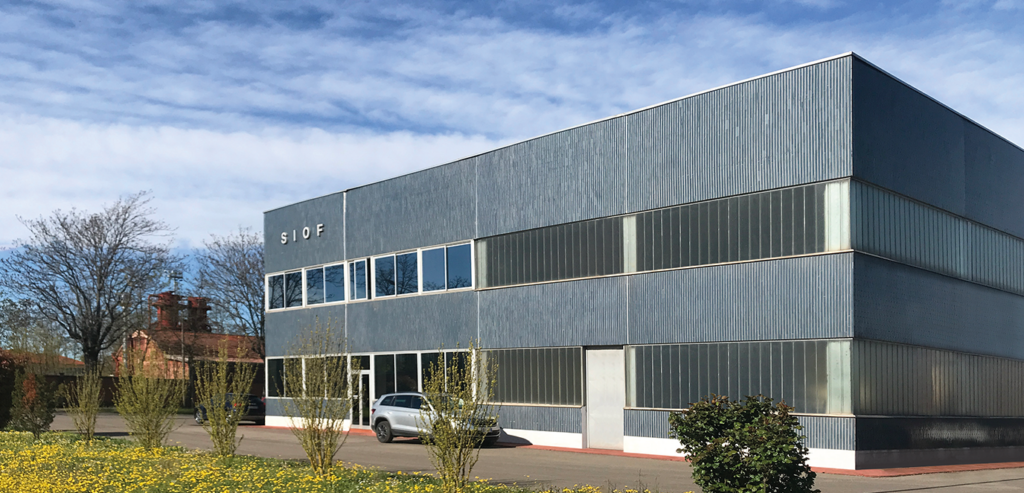
To tell the story of SolidFlow, we need to start a little way back because knowing the history of SIOF helps us understand the origin of the product and the reasons why it came into the world, here in Italy and right now. SIOF is a historic Italian company that recently celebrated a century of history. The company was founded in 1923 by three brave entrepreneurs and has been dedicated to producing, processing, and marketing pigments ever since. The name evokes which pigments are the flagship of SIOF: Italian Iron Oxide Society. With two production sites in Italy, the company continues to be led by the three families that started it, and the fourth generation is just around the corner.

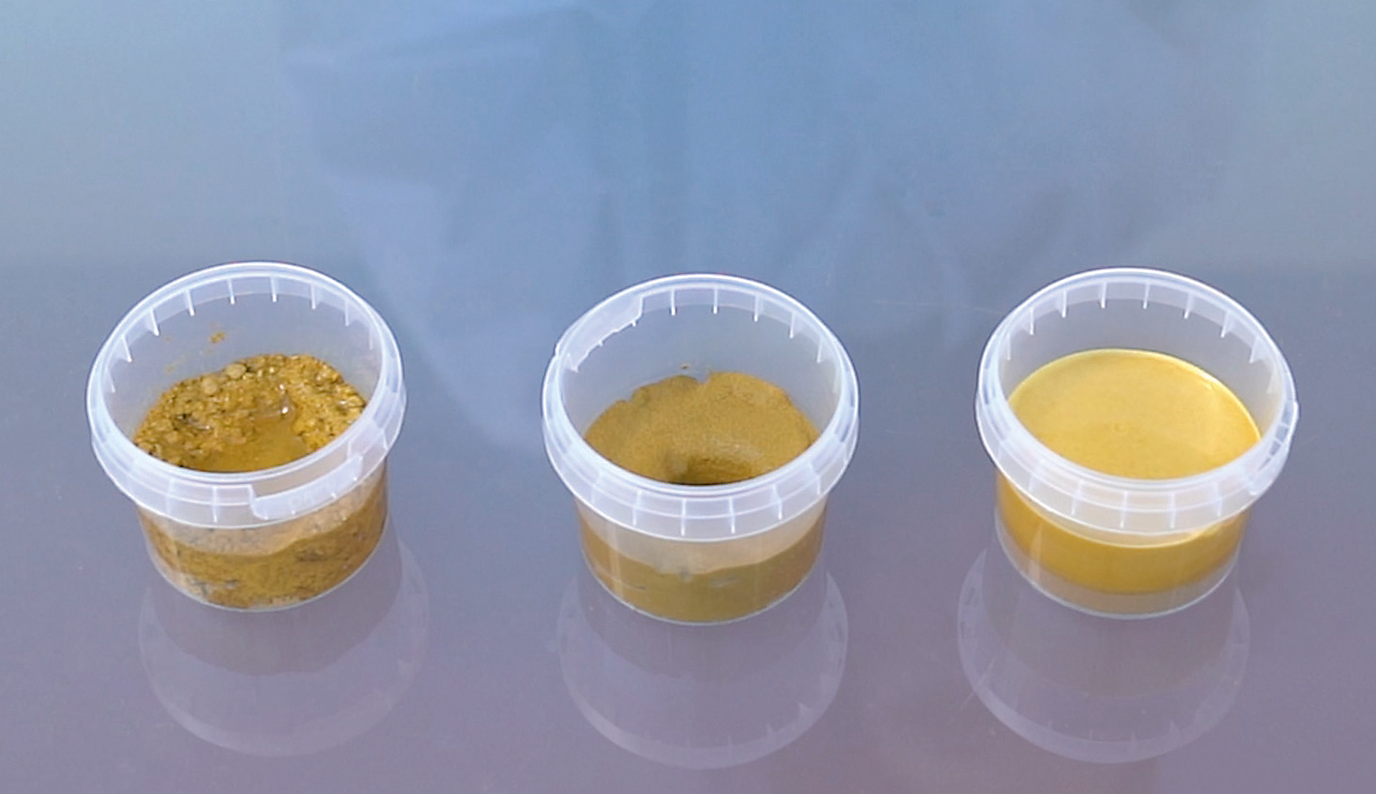
In a tale wrapped in the passion and boldness of Italian entrepreneurship, Giuseppe Zanella, president of SIOF and a direct descendant of the founding pioneers, reveals a unique journey into the world of pigments. SIOF has distinguished itself by its exceptional ability to provide customized solutions, an oasis of creativity in a desert of standardization dominated by global giants. Here, pigments become messengers of emotion, painting the soul of colors with endless spaces for imagination. In solid powders, pigments typically form lyophobic sols that require a meticulous dispersion process, including wetting, grinding, and stabilization steps to be effectively incorporated into the liquid medium in which they are homogeneously distributed. This crucial step transforms the pigment powder into a fine and stable suspension, an essential step in ensuring the integrity of the desired color and performance properties of the finished product, especially in coatings and printing inks. Dispersing pigments to form a stable colloidal (sol) system is a complex and costly operation characterized by high energy expenditure, especially in the milling stage, which requires long times and numerous chemical additives of complex formulation. In addition, improper handling of fine powders can in some cases pose safety risks to operators and the environment. These challenges are exacerbated in highly automated industrial settings, where the precise handling, transport, and dosing of pigments face non-negligible practical obstacles.
The industry has shifted to using concentrated liquid coloring pastes due to the complexities and risks associated with dispersing pigments in powder form. However, although a practical solution, liquid coloring pastes conceal critical environmental issues: they are formed by pigment dispersions in liquids enriched with solvents, dispersing chemical compounds, stabilizers, and biocides to prevent mold growth. These components outline a non-negligible environmental impact, undermining the product’s sustainability. In addition, operational challenges emerge, such as the tendency for sedimentation, which necessitates constantly agitated containers, and the economic burden associated with packaging and transportation, compounded by the fact that a significant portion of the material moved is water or other liquids, increasing costs and carbon footprint.
The pigments industry and the broader paints and coatings sector are responsible for innovating with environmental awareness. It is critical to engage in the development of products and processes that aim to reduce environmental impact significantly. This includes decreasing waste generation, eliminating harmful ingredients such as volatile organic compounds (VOCs), reducing the carbon footprint, and adopting materials from renewable or recycled sources. This is a call to ethical action to ensure a sustainable future. In response to these imperious needs, SIOF embarked on an ambitious initiative almost four years ago: the development of pigments structured in a solid, granular form that is, therefore, safe, manageable, and easy to dose. An exceptional ability distinguishes these pigments: dispersing entirely in a liquid medium with a minimum energy use, thus releasing the full coloring potential efficiently.

Giuseppe Zanella, President of SIOF

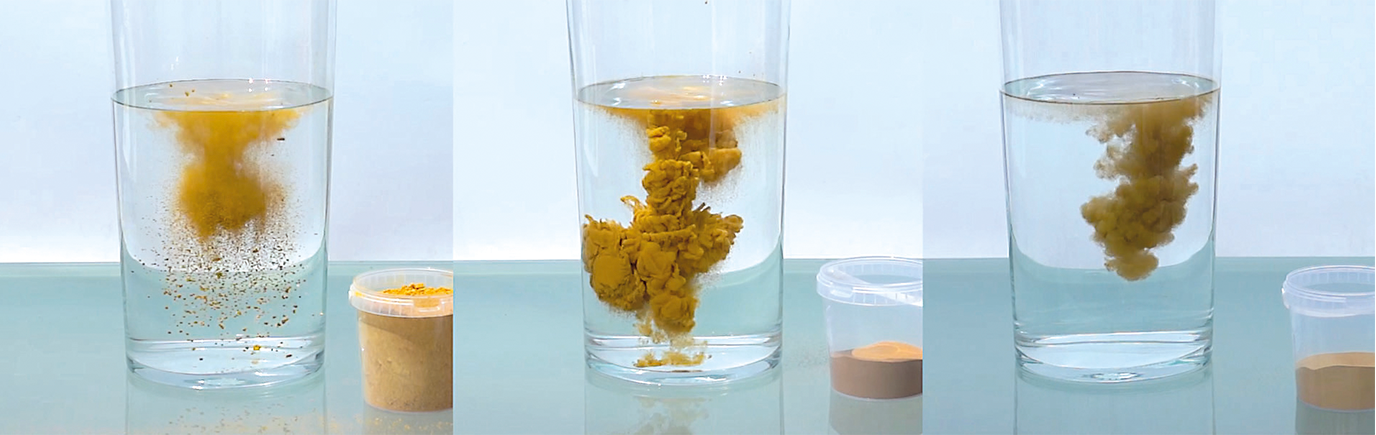
The magic of SolidFlow is manifested in its innovative structure, which makes it comparable to a pre-dispersed pigment but with an exceptionally high content. This distinctive feature allows the pigment to offer superior redispersion properties by optimizing the interaction between the pigmented particles and the medium into which they are introduced. SolidFlow uses a patented technology that ensures rapid and homogeneous redispersion. An initiative that not only addresses the need for safety and convenience but lays the foundation for a more sustainable future in the pigment industry. The innovation brought with this new pigment redefines the concept of sustainability in the field of pigments. Unlike traditional methods, which start with liquid dispersions and then resort to energy-intensive drying processes, SolidFlow introduces a revolutionary process. This method makes it possible to produce structured granular pigments with more than 90 percent pigment content, reducing energy consumption by more than 80 percent compared to standard granulation techniques. This remarkable qualitative leap eliminates the need for fossil fuels, relying solely on electricity, produced independently by SIOF through photovoltaic systems.

A unique product that enhances energy conservation and promotes responsible production.
SolidFlow’s innovative process goes beyond simply saving energy and fully embracing sustainability: it minimizes the use of additives selected for their eco-friendliness while eliminating the use of biocides and solvents. This approach guarantees highly concentrated pigments and ensures long-term stability, ease of transport and handling, and the ability to overcome critical issues common in the industry. SolidFlow is thus distinguished by a reduced ecological footprint, reaffirming SIOF’s commitment to innovative and responsible solutions.

SIOF, building on its deep expertise in the pigment industry, overcame engineering challenges by partnering with an Italian start-up pioneering artificial intelligence applied to chemical processes. This synergy has resulted in a state-of-the-art, AI-governed, patent-protected industrial plant unparalleled worldwide.

DOWNLOAD THE PDF FILE