Sameli Hakola – TREET
As timber construction moves into infrastructure and high-performance buildings, fire protection coatings are becoming a critical enabler not just a compliance layer. The global construction industry is undergoing a structural shift reshaping material choices, design freedom, and performance expectations. At the center of this transformation is timber construction.
Once considered a niche solution, mass timber and engineered wood products are now moving firmly into mainstream construction from commercial, institutional, industrial to multi-family buildings. This transition is not incremental, it is systemic. The growth of mass timber is being driven simultaneously by evolving building codes that allow taller timber structures, the growing demand for low-carbon and sustainable materials, and the industrialisation of construction through prefabrication and modular systems.
The scale is already visible. Thousands of mass timber projects are underway globally, while landmark developments such as Stockholm Wood City spanning 250,000 m² highlight how rapidly timber is expanding into large-scale urban construction.
At the same time, the coatings market around timber is growing in parallel. The global fireproofing coatings for wood market is projected to grow at over 4% CAGR through 2031, driven directly by the increasing use of exposed timber in architecture and the need to meet fire performance requirements without compromising design.
In Europe in particular, where timber construction is well established and regulatory frameworks are stringent, fire-retardant coatings are no longer a secondary consideration. They are becoming a critical component of how timber buildings are designed, specified, and approved.
But as timber moves into more demanding environments – public infrastructure, high-occupancy buildings, and complex commercial projects – one factor continues to define how far it can go: fire performance.
From constraint to enabler
Mass timber has already proven its structural capabilities. The question facing architects and developers today is no longer whether timber can be used but where it can be used. In high-risk or highly regulated environments, fire performance quickly becomes the limiting factor. Requirements such as Euroclass B-s1, d0 classification are essential for exposed wood surfaces in occupied spaces, circulation routes, and public areas. This is where fire protection coatings are undergoing a fundamental repositioning. Rather than serving as a final compliance layer, coatings are becoming an integral part of the material system itself enabling timber to meet safety requirements while preserving its architectural and environmental advantages.
For Treet, this shift is embodied in the development of its Norflam® solutions. Designed as a bio-based, waterborne fire-retardant solution, it aligns with both regulatory demands and sustainability targets, while preserving the natural appearance of wood. It can be applied both in factory-controlled environments and on-site, allowing it to integrate seamlessly into prefabricated and hybrid construction workflows.
As Sameli Hakola explains: “Fire protection coatings are no longer just about meeting regulations – they are enabling timber to enter entirely new building categories”.
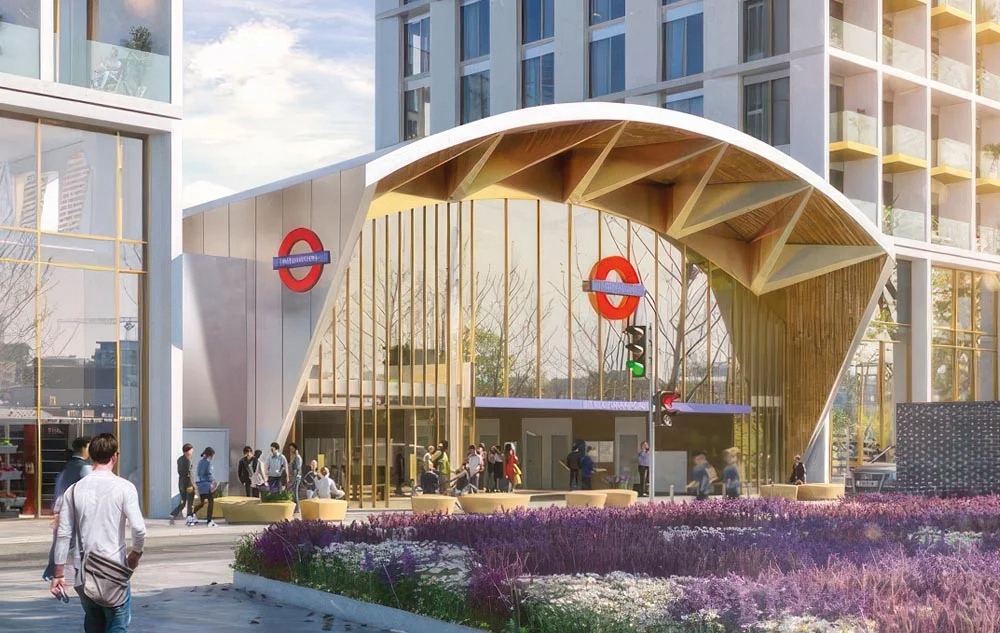
Infrastructure: where timber breaks its boundariesNowhere is this shift more visible than in infrastructure projects, where timber has historically faced the greatest barriers. In London, metro and railway developments such as Surrey Quays and Colindale demonstrate how engineered timber can be used in high-traffic, safety-critical environments. These projects required large-scale CLT and glulam structures to meet strict fire classifications without compromising construction efficiency or design intent.
Jess Pearce, Engineer & Project Manager at Buckland Timber, highlights the importance of this balance: “Treet’s flame retardant solution is perfect for us. Besides providing the required B-s1, d0 reaction to fire performance, the product is waterborne, non-volatile and suitable for both on-site and offsite treatment of our large CLT and glulam structures. I also find the range of translucent colours very useful”. This highlights a critical shift: in infrastructure, achieving fire classification is not enough; the solution must also fit seamlessly into industrial processes, tight timelines, and large-scale production environments.
Design freedom: architecture without compromise
While infrastructure projects demonstrate scalability, architectural projects reveal another dimension of the challenge: preserving design intent.
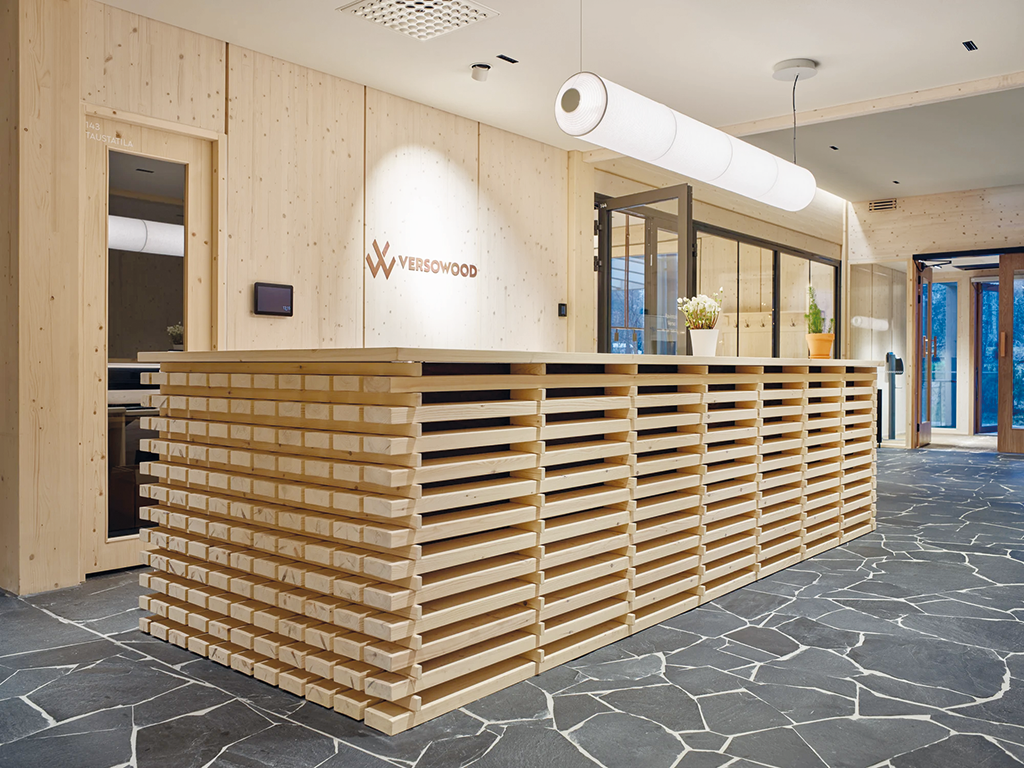
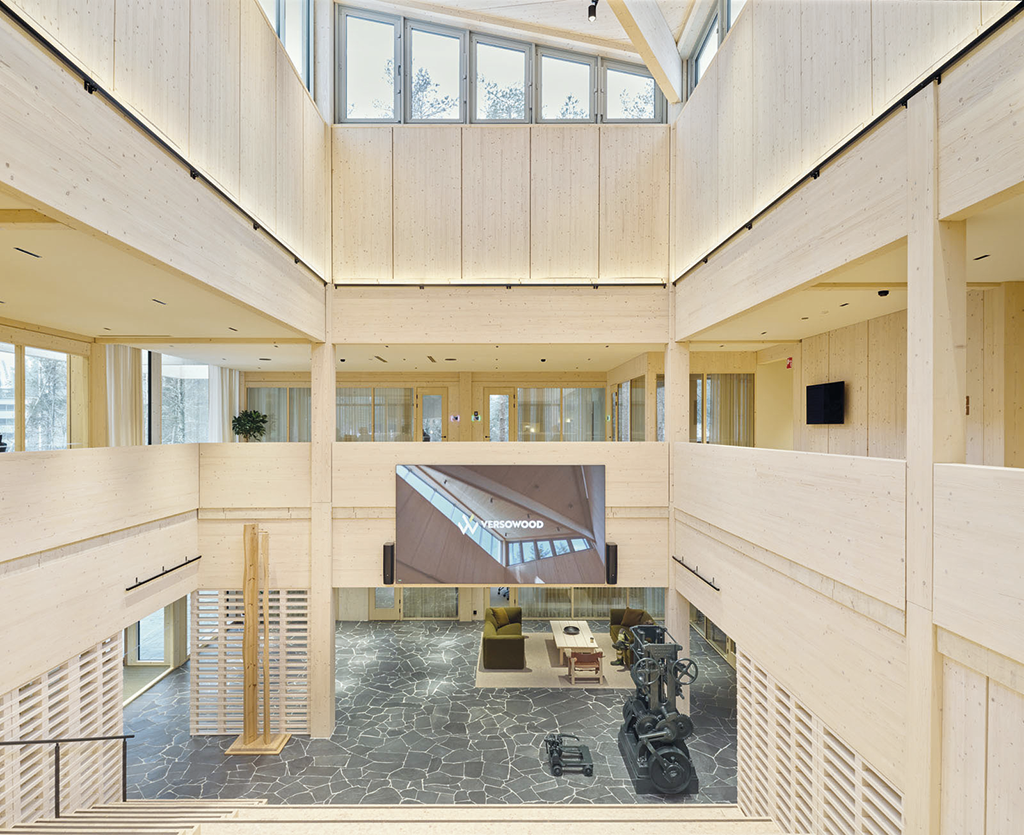
The Versowood headquarters in Finland is a clear example. Designed as a showcase of wood construction, the building relies extensively on visible timber surfaces. At the same time, it needed to meet strict fire safety requirements without relying heavily on sprinkler systems or covering the wood. Using Treet’s fire-retardant coating system, the project achieved the required classification while maintaining a consistent, natural wood appearance throughout the interior. As Tuomas Huuskonen, Project Manager at Versowood has stated: “Treet’s fire-retardant is an outstanding innovation. It enabled the realization of a timber building like this without sprinklers, avoiding the significant costs and potential damage they would have entailed”.
From the client’s perspective, the value extended beyond compliance to the ability to maintain the architectural vision. The coating allowed timber to remain fully visible and integrated across the building, while avoiding additional layers or systems that could compromise the design or increase complexity.
From niche application to infrastructure scale
As timber construction expands, fire protection is moving earlier in the design and specification process. What was once treated as a late-stage requirement is now being considered from the outset, particularly in projects involving prefabrication, hybrid construction, and exposed timber elements. Architects, engineers, and developers increasingly expect coating systems to provide not only certified performance, but also predictable application, durability, and compatibility with industrial processes. This evolution reflects a broader transition “from niche to infrastructure”. As timber enters more demanding segments, the requirements placed on fire protection systems become more complex and more integrated. In this context, coatings are no longer standalone products. They are part of a larger system that must function reliably across design, manufacturing, and on-site execution.
Timber is scaling fast but its limits are no longer structural, they are regulatory. As it moves into infrastructure and high-demand environments, fire performance becomes the deciding factor. Coatings are no longer secondary; they are what make timber viable at scale, enabling compliance without sacrificing design freedom and working seamlessly across the construction ecosystem from manufacturers to architects and on-site partners. The buildings are getting bigger, the expectations higher and the margin for error smaller. In this next phase, success will increasingly come down to one thing: fire performance.