Carla van Bulmen – BARIL COATINGS
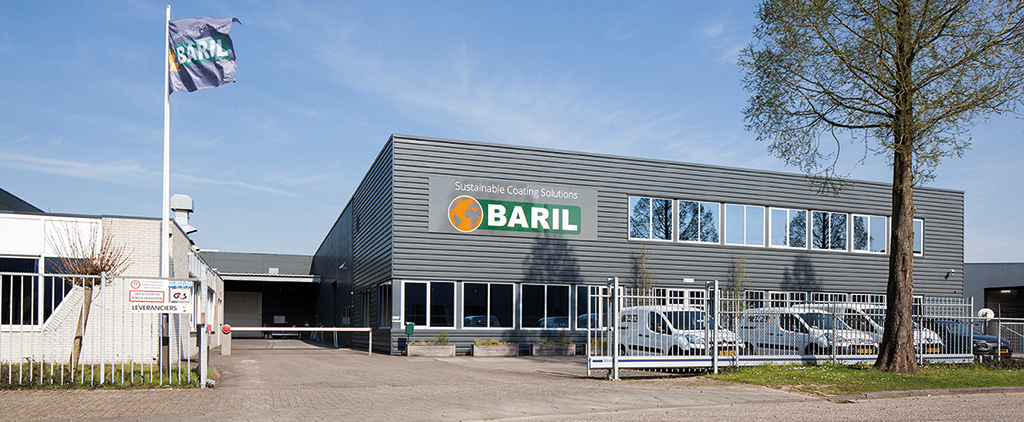
The coatings industry faces a major challenge: products must become more sustainable while continuing to meet the same demanding technical performance standards. For Baril, a manufacturer of sustainable paints and coatings, this is nothing new. For nearly 25 years, the Dutch company has been exploring the use of bio-based and circular raw materials in coating systems. Jasmijn Janssen, R&D Manager, explains Baril’s approach to innovation: carefully, systematically, and with a focus on the entire system.
“Look around you. Bridges, locks, wind turbines, industrial installations, ships, bicycles, cars, homes, schools – almost everything is painted or coated. These are applications where a coating must withstand corrosion, wear, and weathering for many years. Paints and coatings are therefore inherently sustainable: they extend the service life of materials. But real progress is achieved when the product itself is also sustainable”. “Coatings are carefully balanced systems. Even a small change in the formulation can affect the entire system, for example, adhesion, gloss retention, drying behaviour, or flow characteristics”, explains Jasmijn.
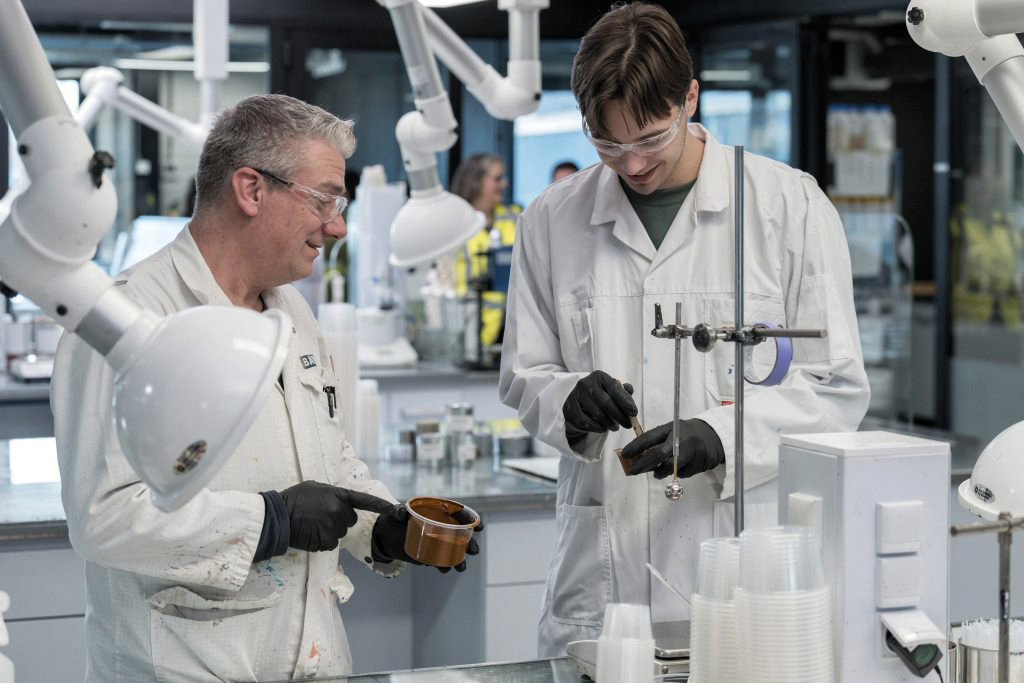
For this reason, every new bio-based or circular raw material is thoroughly tested, wherever possible within existing, proven formulations. “This allows us to immediately assess the impact on a product’s quality and performance. When you change one parameter, the entire system changes”, says Jasmijn.
Using this approach, Baril has successfully replaced part of the binder in an epoxy primer with a bio-based alternative. In addition, the company’s patented DualCure system also offers opportunities to incorporate bio-based raw materials—an innovation journey that started with nothing more than a laboratory sample. Baril is also investigating alternative solvents and circular fillers. One example is recycled calcium carbonate recovered from drinking water treatment processes. Because the composition of recycled material varies depending on its source, every new source requires a thorough assessment before it can be used.
“Nevertheless, we have succeeded in converting our entire demand for calcium carbonate in industrial coatings to recycled material sourced from different waste streams”, Jasmijn explains.
Collaboration as a source of knowledge
For in-depth research, Baril works closely with knowledge partners and collaborative research projects. “We need other companies to help make coatings and paints even more sustainable, for example, by ensuring the availability of alternative raw materials”, says Jasmijn. “Sometimes we simply have to wait until certain raw materials become available. That, too, can slow down the sustainability transition”.
A long-term sustainable strategy
At Baril, working with bio-based and circular raw materials has been a core strategic direction for many years. Wherever possible, new products incorporate a bio-based or circular content, provided this is fully compatible with the high performance standards demanded by the market. Product quality always remains the top priority. Baril’s approach demonstrates that sustainable innovation is not about making rapid substitutions, but about understanding the complete coating system, building formulation expertise over time, and continuously refining solutions through repeated iteration. In this way, sustainable building blocks are steadily earning their place in coatings that are required to perform under the most demanding conditions.